Breast Self-Exam and Screening: A Guide for Indian Women
In India most breast cancers are found only after they have spread beyond the breast, and late is what kills. Here is how to check, what screening you can actually get, and the honest truth about what self-examination can and cannot do.
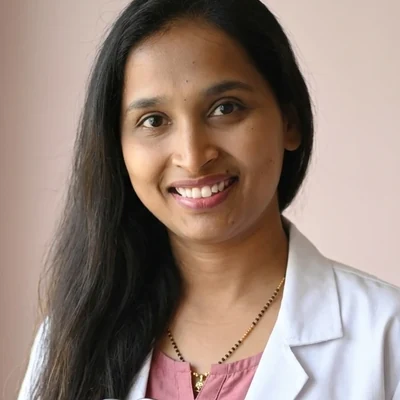 Dr. Geeta S. K.
The short answer: Know what your own breasts normally look and feel like, and see a doctor quickly when something changes. That is what genuinely helps. I will be honest with you about something most articles will not say: large trials found that teaching women a strict monthly self-examination routine did not reduce deaths from breast cancer. Knowing your own body and acting fast still matters enormously, because in India the problem is not that we get breast cancer often. It is that we find it late.
What you will learn
- Why Indian women get breast cancer less often but die of it just as often
- How to check your breasts, step by step
- What self-examination can and cannot do, honestly
- What free screening our government actually offers, and at what age
- Which changes are normal, and which need a doctor this week
Why this matters so much for Indian women
Breast cancer is the most common cancer among Indian women. WHO's cancer agency estimates about 2.37 lakh new cases a year here, close to one in three of all cancers in women, and it is also the leading cause of cancer death in Indian women.
Now here is the number that keeps me awake. In India's national cancer registry, pooling more than six lakh treated patients across 58 hospitals, 57 out of every 100 women with breast cancer had already reached a locally advanced stage by the time they were diagnosed. That means the cancer had spread beyond the breast into the surrounding tissue or nearby lymph nodes before anyone found it. It is usually not that the cancer moved fast. It is that we reached a doctor late.
There is a second way to see the same problem. According to the World Health Organization's cancer estimates, an American woman is about three times more likely than an Indian woman to develop breast cancer, and yet Indian women die of it at a slightly higher rate. Fewer of us get it. More of us die of it.
Read those together and you have the whole problem. The disease is not more aggressive here. We find it later, and late is what kills.
Our own health ministry put the stakes plainly in its 2016 cancer framework, using survival figures from a population study of developing countries. Breast cancer found early: about 76 out of 100 women alive five years later. Found late: about 15 out of 100. Same disease. The only thing that changed is when it was found. Those figures are more than a decade old now, and treatment has improved since, but the shape of the gap has not.
How do I check my breasts?
The NHS method is simple and you do not need to learn anything complicated. Checking about once a month is a good habit. Treat that as a rhythm for getting to know your own breasts, not a test you can pass or fail, and I explain why that distinction matters further down. Many women find it easiest in the shower or lying down.
The goal is not to hunt for cancer. The goal is to learn what normal feels like for you, so that a change stands out.
When in the month should I check?
Cancer Research UK says there is no set time and no set way. What matters is knowing how your breasts normally feel, and how that changes with your periods. If you still get periods and you notice general lumpiness that feels the same in both breasts, check again next month, a few days after your period finishes. Spread-out lumpiness in both breasts that settles after your period is usually hormonal and not a worry. After periods stop, breasts usually feel softer and less lumpy.
One distinction to hold on to, because it matters. General lumpiness across both breasts is different from one distinct new lump you can put a finger on. A single new lump gets examined, even if it seems to change with your cycle.
Cyclical soreness before a period is very common and is not a cancer sign. If tender breasts are part of a bigger premenstrual pattern for you, I cover that in my guide to severe premenstrual symptoms and PMDD.
The honest truth about breast self-examination
I want to tell you something that may surprise you, because you deserve accurate information rather than a comfortable slogan.
Two very large trials, covering nearly four lakh women in Russia and China, tested whether teaching women a formal monthly self-examination routine reduced deaths from breast cancer. Reviewed together by Cochrane, it did not. What it did do was send almost twice as many women for a biopsy that turned out to be harmless.
That is why no major health authority today asks you to follow a strict monthly technique as a way of screening for cancer. The American Cancer Society's position is that women should be familiar with how their breasts normally look and feel, and report any change straight away, and that knowing what to look for does not replace proper screening.
So why did I just show you how to check? Because there is a real difference between two things:
- Self-examination as screening, meaning a ritual that is supposed to catch cancer in a healthy woman. That is not proven to save lives.
- Breast awareness, meaning you know your own body well enough to notice when something is different, and you come in quickly. That is what every authority does ask of you, and in a country where most cancers are found late, it matters.
Please do not let this make you casual. Let it make you calmer and faster. Fewer anxious midnight searches, more quick appointments when something genuinely changes.
What screening can I actually get in India?
Our national programme does not send every woman for a mammogram. It offers a clinical breast examination, meaning a trained health worker checks your breasts by hand, at your sub-centre or primary health centre. If something is found, you are referred for an ultrasound and, if needed, a biopsy.
| Who | What they advise | Ages |
|---|---|---|
| India, health ministry | Hand examination by a health worker, every 5 years | 30 to 65 |
| WHO, stretched health systems | Get symptoms seen fast; hand examination is promising | Any age with a symptom |
| US task force | Mammogram every 2 years | 40 to 74 |
| American Cancer Society | Yearly mammogram is an option from 40, advised from 45 | 40 to 44 optional, 45 plus |
You will notice the American bodies advise mammograms and ours advises a hand examination. Neither is wrong. They are answers to different situations. A country with a mammogram machine within reach of every woman can screen that way. Ours is building towards it, so the programme is designed around what can actually reach a woman in a taluk today.
A twenty-year study in Mumbai, following over one and a half lakh women, tested exactly this approach. Women screened by a trained health worker every two years were found at an earlier stage: 37 out of 100 arrived at stage three or four, against 47 out of 100 of the unscreened. Deaths fell by about 15%, though that overall figure was not statistically firm. In women above 50 the benefit was clear, with nearly 30% fewer deaths.
My practical advice: if you are 30 or above, ask at your nearest primary health centre about the free examination. If you are 40 or above and can afford a mammogram, discuss it with your doctor rather than assuming you do not need one.
What is normal, and what is not?
Most breast lumps are not cancer. Many turn out to be a fluid-filled cyst or a harmless growth. But you cannot tell the difference at home, and nobody expects you to.
| Usually normal | Get it checked |
|---|---|
| One breast slightly smaller | A new lump, breast or armpit |
| Lumpy just before a period | A lump that stays after a period |
| Both breasts sore before a period | Skin dimpling, like orange peel |
| Softer, less lumpy after menopause | Nipple turning inwards, or a rash |
| Milk while breastfeeding | Any discharge with blood in it |
A harmless growth called a fibroadenoma is common in younger women. The American Cancer Society describes it well: it can feel like a marble in the breast, round or oval with clear edges, movable under the skin, firm or rubbery, and usually not painful. Simple ones do not seem to raise your cancer risk. Even so, a new lump is examined rather than assumed.
One thing worth knowing for our skin tones: redness and other skin changes can look different on brown skin than in the pictures you see in textbooks. What looks red on fair skin may look darker or brownish on ours. Trust a change you can see, even if it does not match a photograph.
See a doctor without waiting if you notice
- A lump or swelling in a breast, in the chest, or in the armpit
- Skin that is dimpled or puckered, like the peel of an orange
- A change in the size or shape of one breast that is not usual for you
- Discharge from a nipple when you are not pregnant or breastfeeding, especially with blood
- A nipple that has turned inwards, or a rash on the nipple that looks like eczema
- A sore or ulcer on the breast that is not healing
- Pain in a breast or armpit that does not go away
Most of these turn out to be harmless. Get them looked at anyway. Please do not try to diagnose a lump yourself.
What raises the risk, and what does not
Here is a fact that should lift some guilt off you. WHO states that about eight in ten women who develop breast cancer had no modifiable risk factor other than being female and being over 40. Being a woman and getting older is the risk.
The risk factors WHO does list include increasing age, obesity, harmful use of alcohol, a family history, past radiation exposure, reproductive history, tobacco use, and hormone therapy after menopause. Breastfeeding is protective, which is worth knowing if you are planning your family. I cover feeding and recovery in my month-by-month pregnancy guide.
Now the myths I am asked about most in clinic. Wearing a bra, including an underwired one, does not cause breast cancer. No scientific evidence links deodorants or antiperspirants to it either. A knock or injury to the breast does not cause it, though it may draw your attention to a lump that was already there. And a clean family history is not a reason to ignore a change in your breast.
For the wider picture of check-ups worth having at each stage of life, see my essential health guide for Indian women. If your cycles are irregular alongside breast changes, my guide to irregular periods may help you make sense of the pattern.
Your questions, answered
Does a monthly self-exam prevent breast cancer?
No, and nothing you do at home prevents it. Large trials found a formal monthly self-examination routine did not reduce deaths, and it led to almost twice as many harmless biopsies. What helps is knowing your own breasts well enough to notice a change, and seeing a doctor quickly when you do.
I am under 40. Do I need to worry?
Worry, no. Pay attention, yes. In India's hospital cancer registries, breast cancer was the commonest cancer in women in every age group from 25 years upward. A new lump at 32 deserves the same examination as one at 52. Do not let anyone tell you that you are too young to be checked.
Should I get a mammogram?
It depends on your age, your risk, and what you can access. Our national programme uses a hand examination from age 30, not routine mammography. Western guidance starts mammograms between 40 and 45. If you are 40 or above, or you have a strong family history, discuss it with your doctor rather than deciding alone.
My mother had breast cancer. What should I do differently?
Tell your doctor, and be specific about who in the family, at what age, and which cancer. A strong family history can change when your screening should start and which test is used. That is a conversation to have now rather than at your next problem.
I found a lump. How quickly should I come?
This week. Not after the next festival, not after your daughter's exams. Most lumps are harmless, and the quickest way to stop worrying is to have it examined. If it is something, early is what gives you the good outcome.
Is breast pain a sign of cancer?
Breast pain on its own is unlikely to be a symptom of cancer. Pain linked to periods usually starts up to two weeks before, affects both breasts, and settles when the period ends. Pain that stays in one spot and does not go away should be checked.
Found something, or simply not sure?
Bring it to me rather than to a search engine at midnight. In a 30-minute video call we can go through what you have noticed and how quickly you need to be seen. I want to be straight about the limit: a video call cannot feel a lump, so any new lump or lasting change needs an examination in person, and I will tell you that plainly rather than reassure you from a screen.
Sources for this article (14)
- GLOBOCAN 2024 India fact sheet, WHO International Agency for Research on Cancer (accessed July 2026)
- WHO fact sheet: Breast cancer (accessed July 2026)
- Kosters and Gotzsche, Regular self-examination or clinical examination for early detection of breast cancer, Cochrane Database of Systematic Reviews (accessed July 2026)
- Mittra et al., Effect of screening by clinical breast examination on breast cancer incidence and mortality after 20 years, Mumbai, BMJ, 2021 (accessed July 2026)
- Operational Framework: Management of Common Cancers, Ministry of Health and Family Welfare, Government of India (accessed July 2026)
- NHS, How to check your breasts or chest (accessed July 2026)
- Cancer Research UK, Finding breast cancer early (accessed July 2026)
- American Cancer Society, Breast cancer signs and symptoms (accessed July 2026)
- US Preventive Services Task Force, Breast Cancer: Screening, 2024 (accessed July 2026)
- National Cancer Registry Programme, cancer incidence estimates, Indian Journal of Medical Research (accessed July 2026)
- GLOBOCAN 2024 United States fact sheet, WHO International Agency for Research on Cancer (accessed July 2026)
- ICMR-NCDIR, Cancer Statistics 2020: Report from the National Cancer Registry Programme, JCO Global Oncology (accessed July 2026)
- ICMR-NCDIR, Report of the Hospital Based Cancer Registries, 2021 (accessed July 2026)
- Collaborative Group on Hormonal Factors in Breast Cancer, Breast cancer and breastfeeding: reanalysis of 47 studies in 30 countries, The Lancet, 2002 (accessed July 2026)
This article is for your information and learning. It is not a substitute for a consultation. For advice about your own health, talk to me or your own doctor.
About Dr. Geeta S. K.
Dr. Geeta S K, MBBS, DGO, FRM, DRM (Germany), is a gynecologist and fertility specialist. She provides clear, compassionate guidance on PCOS, pregnancy, fertility and women's health.