PCOS and Irregular Periods: Getting Your Cycle Back Naturally
How food, movement and weight bring PCOS cycles back, what the research really shows, and when lifestyle alone is not enough.
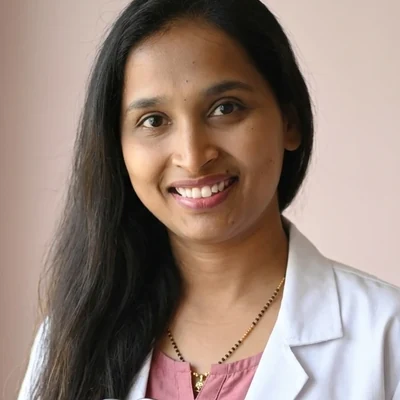 Dr. Geeta S. K.
The short answer: Yes, cycles often come back with lifestyle changes alone. The three levers with real evidence are weight (if yours is high), steady blood sugar, and regular movement. In a 2026 analysis of women who had PCOS with severe obesity, each 1% of body weight lost raised the odds of ovulation returning by about 5.6%. In a year-long trial, 95% of overweight women eating a low glycaemic index diet showed improved cycle regularity, against 63% on a standard healthy diet. Give an honest plan 3 to 6 months before deciding it has not worked.
What you will learn
- Why PCOS stops ovulation, in one plain paragraph
- The three levers that actually restore cycles, with their numbers
- What to do if you are lean and your cycles are still irregular
- A realistic timeline, so you know when to stop waiting
- Why protecting the lining of your uterus matters while you wait
Why does PCOS stop periods coming?
For most women with PCOS it starts with insulin, the hormone that moves sugar from blood into cells. In PCOS the cells often stop responding to insulin properly, and this happens in lean women too, not only with weight gain.
The body compensates by making more insulin. That extra insulin pushes the ovaries to make more male-type hormones, and those hormones stall the monthly release of an egg. No egg released means no progesterone, and no progesterone means the lining sheds whenever it likes rather than on time. That is your irregular cycle.
The useful part of this chain is that it works backwards too. Anything that lowers circulating insulin takes pressure off the ovaries, and ovulation often returns on its own. That is why food, weight and movement are not soft advice here. They act on the actual mechanism.
One naming note, since you will start seeing it. In May 2026, after more than a decade of global consultation, PCOS was formally renamed polyendocrine metabolic ovarian syndrome, or PMOS, because the condition is hormonal and metabolic rather than a problem of ovarian cysts. The rename does not change the criteria used to diagnose it, or anything in this article. I still say PCOS in my clinic, and so does almost everyone.
Lever one: weight, but only if yours is high
This is the strongest natural lever we have where weight is high. The 2023 international guideline deliberately avoids one fixed target, asking instead for a plan tailored to your own energy needs and activity level, with preventing further weight gain as the first goal.
What the research adds is encouraging, because it means small progress counts. A 2026 analysis of 75 women who had PCOS with severe obesity found each 1% of body weight lost raised the odds of ovulation returning by about 5.6%.
Be careful with the headline from that study, though, and I would rather you heard this from me than felt let down later. Half the women in it had weight-loss surgery. In that surgical group, 72% were ovulating again within a year. In the group doing it through medical and lifestyle care, it was 31%. So roughly one in three is the honest expectation for the path most of us take, not one in two.
For a woman of 70 kg, a few kilos is not a transformation. Roughly one kilo a month for three months, held steady after, is enough to change the odds.
If your weight is already in a normal range, skip this lever completely. Insulin resistance in PCOS happens independently of body fat, so lean PCOS is real, and cutting food further tends to worsen cycles rather than fix them. Your levers are the other two. If you are unsure where you sit, my free BMI calculator gives you a starting number in a few seconds.
Lever two: eat so blood sugar stays steady
The single best trial we have on this ran for 12 months in overweight women with PCOS. Among those eating a low glycaemic index diet, 95% showed improved cycle regularity, compared with 63% on a standard healthy diet, and insulin sensitivity improved even without extra weight loss. Those numbers count the women who finished the trial, and about half of the participants dropped out along the way.
The practical shape of this, in our kitchens, is simple, and it is not a foreign diet:
- Base grain: ragi, jowar, bajra and whole wheat more often; white rice in smaller portions rather than banished.
- Protein at every meal: a katori of dal, curd, eggs, paneer, chicken or fish. Protein blunts the sugar rise and keeps you full.
- Half the plate vegetables: palya, soppu, salad, whatever is in the market that week.
- Pair, never eat alone: a carbohydrate by itself spikes sugar; the same carbohydrate with dal and vegetables does not.
I am deliberately not rewriting the whole food plan here, because I have already written it in detail. The GI chart for Indian foods, the full 7-day meal plan and the honest verdict on each spice live in my PCOS diet guide for Indian foods. Use this article for the cycle strategy and that one for the plate.
Lever three: move most days, lift twice a week
The recommendation for adults is 150 to 300 minutes of moderate activity a week, or 75 to 150 minutes of vigorous activity, plus muscle-strengthening work on two days.
In plain terms: a brisk 30 to 45 minute walk most days, and two short sessions with weights, bands or bodyweight. Muscle is where blood sugar is used up, so building a little of it lowers the insulin your body needs. This is why strength work earns its place alongside walking, rather than being an optional extra.
Two cautions from clinic. Do not turn this into punishment training on very little food, because that stops periods by a different route. And walking after dinner, even 15 minutes, is worth more than an ambitious plan you abandon in week two.
Put together, the plan looks like this.
| Lever | What it looks like day to day | Who it is for |
|---|---|---|
| Weight | A gentle, steady loss you can hold, not a crash diet | Only if your weight is high |
| Steady blood sugar | Millet or wheat base, dal or curd at every meal, half a plate of vegetables | Everyone with PCOS, lean included |
| Movement | 30 to 45 minute brisk walk most days, plus two strength sessions | Everyone with PCOS |
| Sleep and stress | Fixed sleeping and waking times, and a real limit on the daily load | Everyone, and first if stress is the loudest thing |
| Lining protection | Progesterone tablets a few times a year, if gaps stay long | Anyone whose gaps cross 90 days |
What about sleep and stress?
They are not filler. Short sleep and unrelenting stress push insulin and appetite the wrong way, which undoes some of what the other levers achieve. A fixed sleep and waking time is one of the few free treatments in medicine.
The one thing to avoid is stacking so much discipline on yourself that food becomes fear. I see that often, and it makes cycles worse, not better. If stress is the loudest thing in your life right now, start there. My guide to stress and hormone balance for Indian women is written for exactly that.
How long before I know it is working?
| Time from starting | What to look for |
|---|---|
| Weeks 1 to 4 | Steadier energy, fewer sugar crashes. Cycles usually unchanged, and that is normal |
| Month 2 to 3 | Some weight movement if that was a lever, and often the first cycle that arrives sooner than expected |
| Month 3 to 6 | The honest review point. Many women see cycles shorten and settle by now |
| Beyond 6 months | If nothing has shifted with genuine effort, that is medical information, not personal failure. Time to add treatment |
Track your dates while you do this, otherwise you will be guessing at the review. If you are trying to conceive, my free ovulation calculator estimates your fertile days from your usual cycle length, keeping in mind it is only a rough guide when cycles are irregular.
One thing to protect while you wait
This part gets left out of most natural-treatment articles, and it matters. When months pass without ovulation, the lining of the uterus keeps getting oestrogen with no progesterone to shed it. Over years, that raises the risk of the lining becoming abnormal. Studies suggest women with PCOS carry roughly 2 to 6 times the endometrial cancer risk of women without it, though the evidence is not fully settled and for a young woman the everyday risk stays small.
So if your gaps are long, ask your doctor how your lining is being protected while lifestyle work is in progress. Usually that means a short course of progesterone tablets a few times a year. Choosing the natural route does not mean choosing no protection.
Do not stay on lifestyle alone if
- You have had no period for 3 months, or any gap longer than 90 days
- You get fewer than 8 periods in a year despite 6 months of honest effort
- You are trying for a baby and have been for 12 months, or 6 months if you are over 35
- Facial or body hair is increasing quickly, or your voice is deepening
- You have never had thyroid and prolactin tests done
- Food has started to feel frightening, or eating feels out of control
Your questions, answered
Can PCOS be cured naturally?
Managed, not cured. PCOS is a long-term condition, and lifestyle changes work on the mechanism well enough that cycles often become regular and stay regular while the habits hold. If the habits stop, the cycles usually drift back. That is honest, and it is still worth doing.
How much weight do I need to lose before my periods improve?
There is no single number, and the guideline deliberately does not give one. It asks for a plan built around your own energy needs, starting with not gaining more. The encouraging part is that progress counts on the way: in the 2026 analysis, each 1% of body weight lost raised the odds of ovulation returning by roughly 5.6%.
I am thin with PCOS. Does any of this apply to me?
Yes, apart from the weight lever. Insulin resistance occurs in lean women with PCOS too, so steady blood sugar, strength work and sleep are all still active levers for you. Do not cut calories.
Will my periods stay regular after I stop the diet?
Usually they drift back over months, because the underlying condition remains. Think of it as ongoing management rather than a treatment with an end date. Aim for an eating pattern you would happily keep for ten years.
Do I still need medicine if lifestyle works?
Not necessarily for cycles, if they become regular and stay regular. You may still need medicine for other parts of PCOS, and you still need your lining protected if long gaps continue. That is a conversation with your own doctor, based on your reports.
Is inositol worth taking?
The evidence is limited. The international guideline notes possible improvement in some hormone and metabolic measures, but with limited clinical benefit, and no specific type or dose can be recommended. Metformin has stronger evidence for the metabolic side. Neither one replaces the three levers above.
Let us build your plan around your reports
Bring your hormone reports, your scan if you have one, and three months of dates. In a 30-minute video call we will decide which levers are actually yours, and what needs adding.
Weighing medicines rather than lifestyle? My honest comparison of ayurvedic and modern PCOS treatments covers what each one can and cannot do. If you are still working out whether PCOS is even the cause, start with my complete guide to irregular periods, and read about managing insulin resistance in PCOS for the metabolic detail.
Sources for this article (7)
- International Evidence-based Guideline for the Assessment and Management of PCOS, JCEM, 2023 (accessed July 2026)
- Marsh et al., Effect of a low glycemic index diet in PCOS, American Journal of Clinical Nutrition, 2010 (accessed July 2026)
- Weight loss and ovulatory recovery in PCOS, post-hoc analysis, Human Reproduction, 2026 (accessed July 2026)
- WHO fact sheet: Polycystic ovary syndrome (accessed July 2026)
- Endometrial cancer risk in women with PCOS and how it is reduced, 2023 (accessed July 2026)
- Polycystic ovary syndrome (polyendocrine metabolic ovarian syndrome), StatPearls, NCBI Bookshelf (accessed July 2026)
- Teede et al., Polyendocrine metabolic ovarian syndrome, the new name for PCOS, The Lancet, 2026 (accessed July 2026)
This article is for your information and learning. It is not a substitute for a consultation. For advice about your own health, talk to me or your own doctor.
About Dr. Geeta S. K.
Dr. Geeta S K, MBBS, DGO, FRM, DRM (Germany), is a gynecologist and fertility specialist. She provides clear, compassionate guidance on PCOS, pregnancy, fertility and women's health.