Irregular Periods? Understanding Menstrual Disorders in Women
The clinical side of irregular periods: what each medical name means, the order tests are done in, and when treatment is needed.
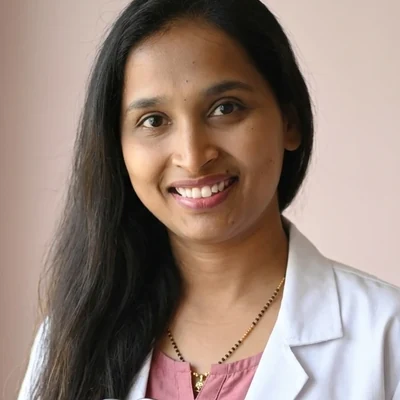 Dr. Geeta S. K.
The short answer: Irregular periods become a medical disorder when the pattern is persistent and has a named cause behind it. Doctors sort them by pattern: infrequent periods (oligomenorrhoea), absent periods (amenorrhoea), too-frequent periods, heavy bleeding, and bleeding between periods. Each points to a different set of causes and a different test. The reason we investigate rather than wait is that long stretches without ovulation leave the lining of the uterus unprotected.
What you will learn
- The medical names for each bleeding pattern, in plain words
- Where normal variation ends and a disorder begins
- The order tests are done in, and why that order matters
- What the 2 of 3 rule for diagnosing PCOS actually means
- Why doctors want you bleeding several times a year, even on medicine
What do doctors call each pattern?
These words appear on reports and prescriptions, so here they are in plain English.
| The word | What it means, and what it usually points to |
|---|---|
| Oligomenorrhoea | Periods coming less often than every 35 days. Usually PCOS, thyroid disease, or an energy deficit |
| Polymenorrhoea | Periods coming more often than every 21 days. Usually cycles without ovulation, or perimenopause |
| Primary amenorrhoea | Periods have never started by age 15, or 3 years after breast development began. Usually developmental, genetic or structural causes |
| Secondary amenorrhoea | Periods stop for 3 months after being regular, or 6 months after being irregular. Usually pregnancy, energy deficit, high prolactin, PCOS or thyroid disease |
| Heavy menstrual bleeding | Blood loss over 80 mL, or heavy enough to disrupt your daily life. Usually fibroids, adenomyosis, polyps, a clotting problem, or thyroid disease |
| Intermenstrual bleeding | Bleeding between two normal periods. Usually polyps, infection, a cervical cause, or hormonal contraception |
Notice that the same illness can produce different patterns in different women. Thyroid disease shows up in this table three times. That is why the pattern narrows the search but does not finish it.
When is it a variation, and when is it a disorder?
The dividing line depends on how long ago your periods started.
| Stage | Treated as irregular when |
|---|---|
| First year after the first period | Almost never. Irregularity here is part of normal puberty |
| 1 to 3 years after the first period | Cycles under 21 days or over 45 days |
| 3 years after, up to perimenopause | Cycles under 21 days or over 35 days, or fewer than 8 cycles a year |
| Any time from 1 year after the first period | Any single cycle longer than 90 days |
| No periods ever | Nothing by age 15, or 3 years after breast development began |
Two further rules I use in clinic. One odd month after illness, travel or heavy stress is not a disorder. And a pattern that has persisted for three months or more has earned an investigation, whatever your age.
How is it investigated?
The order is deliberate. Cheap, decisive tests first, scans later, and only if they change the answer.
A detail worth knowing before you pay for a scan. Since the 2023 international guideline, an adult who already has both irregular cycles and clear signs of high male-type hormones does not need an ultrasound to diagnose PCOS, and an AMH blood test can stand in for the scan. In girls within 8 years of their first period, ultrasound must not be used to diagnose PCOS at all, because young ovaries normally carry many follicles.
The disorders behind the patterns
PCOS, and the 2 of 3 rule
PCOS is diagnosed when any two of these three are present, after other causes are excluded: irregular or absent ovulation, signs of high male-type hormones on your skin or in a blood test, and polycystic-looking ovaries on a scan.
Two of three. Not all three. This is why a woman can have PCOS with perfectly ordinary-looking ovaries, and why a scan showing many follicles by itself does not make the diagnosis. About 1 in 10 Indian women is affected.
One update from 2026: after more than a decade of global consultation, the condition was formally renamed polyendocrine metabolic ovarian syndrome, or PMOS, because the problem is hormonal and metabolic rather than a matter of ovarian cysts. The criteria did not change. Almost everyone, including me, still says PCOS in the consulting room.
Thyroid disease
An underactive thyroid changes cycles in both directions, and infrequent periods is the commonest pattern. In one Indian hospital study of women who came in with irregular periods, about 4 in 10 were newly found to be hypothyroid, most of them in the milder subclinical form. It is a blood test and a daily tablet, which is why skipping this test is the costliest shortcut in the whole process.
High prolactin
Raised prolactin suppresses the signal that triggers ovulation, so periods thin out or stop, sometimes with milk-like nipple discharge. It appears in about 5% to 14% of women whose periods have stopped, and has been reported in around 17% of women with PCOS, though PCOS estimates vary a great deal between studies. Medicines are a common cause, so bring your full list, including psychiatric medicines. If no cause is found, an MRI of the pituitary is the next step.
Functional hypothalamic amenorrhoea
Here the ovaries and thyroid are fine, and the brain has simply turned ovulation down because of stress, an energy deficit, weight loss or heavy training. It is a diagnosis of exclusion, made only after the tests above are clear. Treatment is restoring energy balance with dietary and mental-health support, not hormone tablets alone.
Structural causes
Fibroids, polyps and adenomyosis usually announce themselves through flow rather than timing: heavy bleeding, long bleeding, or bleeding between periods. These are found on a scan, and my guide to heavy periods and how they are managed covers the treatment choices.
Why not simply wait?
Because of what happens to the lining of the uterus. Each month you ovulate, progesterone matures the lining and then sheds it cleanly. When months pass without ovulation, the lining keeps receiving oestrogen with nothing to shed it, and over years it can become abnormal.
Women with PCOS carry roughly 2 to 6 times the endometrial cancer risk of women without it, although for a young woman the everyday risk remains small. Oral contraceptives are known to lower endometrial cancer risk, and in practice the protection offered is one of three: cyclical progesterone tablets, the combined pill, or a hormone-releasing intrauterine device, so the lining sheds regularly. That is the real reason doctors want you bleeding several times a year. It is not about a tidy calendar.
What treatment looks like
Treatment follows the cause, never the pattern alone.
| If the cause is | First-line treatment |
|---|---|
| Thyroid disease | Thyroid medicine, then recheck the cycle |
| High prolactin | Treat the source, often by changing a medicine or with tablets that lower prolactin |
| Energy deficit or over-training | More food, less training, mental-health support |
| PCOS, not trying to conceive | Lifestyle changes, and the combined pill as the recommended first medicine for irregular cycles |
| PCOS, trying to conceive | Letrozole is first-line for ovulation induction; clomiphene alone or with metformin is second-line |
| Structural causes | Treatment aimed at the fibroid, polyp or adenomyosis itself |
Metformin has its place mainly for the metabolic side of PCOS, and the guideline rates it above inositol, which shows limited clinical benefit. If your aim is restoring cycles through food, weight and movement, my guide to restoring cycles naturally with PCOS covers that lane, and my comparison of ayurvedic and modern treatment options weighs the medicines honestly.
This needs a doctor now, not later
- No period for 3 months, with pregnancy ruled out
- Any single gap over 90 days, or fewer than 8 periods a year
- Soaking a pad or cup every hour, or clots bigger than a rupee coin
- Bleeding between periods, after sex, or any bleeding after menopause
- Milk-like nipple discharge without breastfeeding
- Rapidly increasing facial or body hair, or a deepening voice
- No periods at all by age 15
Your questions, answered
Is PCOS the same as having ovarian cysts?
No, and the name misled people for decades. What a scan shows in PCOS are many small immature follicles, not disease cysts that need removing. That confusion is exactly why the condition was renamed in 2026.
Can I be diagnosed with PCOS without a scan?
Yes. If you are an adult with both irregular cycles and clear signs of high male-type hormones, that is two of the three criteria and no scan is needed. If you are within 8 years of your first period, a scan should not be used for the diagnosis at all.
My scan says polycystic ovaries but my periods are regular. Do I have PCOS?
Not on that alone. One criterion out of three is not a diagnosis. Many women with regular ovulation have ovaries that look polycystic on a scan and never develop the condition.
Why does my doctor want me to bleed every few months on medicine?
To shed the lining of the uterus. Long gaps leave it under oestrogen with no progesterone to clear it, which raises the risk of it becoming abnormal over years. A few withdrawal bleeds a year is protection, not cosmetics.
What is subclinical hypothyroidism, and does it affect periods?
It means TSH is raised while the main thyroid hormone is still normal. It is common in Indian women and it can accompany menstrual changes, so it is worth discussing rather than dismissing. Whether to treat depends on how high the TSH is, your symptoms, your antibody result, and whether you are planning a pregnancy.
Do irregular periods always mean a fertility problem?
No. They mean ovulation is unpredictable, which makes timing harder rather than impossible. Many women with irregular cycles conceive naturally. Get assessed after 12 months of trying, or 6 months if you are over 35.
Bring me your reports and let us read them together
If you have a scan or hormone report you do not understand, or you have been told PCOS with no explanation, a 30-minute video call is usually enough to give you a clear diagnosis and a plan.
New to all this? Start with my complete guide to irregular periods for the plain overview, or read about the causes and what genuinely helps at home.
Sources for this article (11)
- International Evidence-based Guideline for the Assessment and Management of PCOS, JCEM, 2023 (accessed July 2026)
- ASRM, Current evaluation of amenorrhea: a committee opinion, 2024 (accessed July 2026)
- Abnormal Uterine Bleeding, StatPearls, NCBI Bookshelf (accessed July 2026)
- ACOG, Abnormal Uterine Bleeding, patient guidance (accessed July 2026)
- Endometrial cancer risk in women with PCOS and how it is reduced, 2023 (accessed July 2026)
- Hypothyroidism and menstrual irregularities in reproductive-age women, Cureus, 2024 (accessed July 2026)
- Hyperprolactinemia, StatPearls, NCBI Bookshelf (accessed July 2026)
- Majumdar and Mangal, Hyperprolactinemia, Journal of Human Reproductive Sciences (accessed July 2026)
- Gordon et al., Functional Hypothalamic Amenorrhea: an Endocrine Society Clinical Practice Guideline, JCEM, 2017 (accessed July 2026)
- Bharali et al., Prevalence of PCOS in India: systematic review and meta-analysis, Cureus, 2022 (accessed July 2026)
- Teede et al., Polyendocrine metabolic ovarian syndrome, the new name for PCOS, The Lancet, 2026 (accessed July 2026)
This article is for your information and learning. It is not a substitute for a consultation. For advice about your own health, talk to me or your own doctor.
About Dr. Geeta S. K.
Dr. Geeta S K, MBBS, DGO, FRM, DRM (Germany), is a gynecologist and fertility specialist. She provides clear, compassionate guidance on PCOS, pregnancy, fertility and women's health.